Create a warm, welcoming outdoor “room” that feels like a natural extension of your home without glare, hotspots, or coastal corrosion.
On Cape Cod and the South Shore, deck lighting has to do more than look good. It needs to handle salt air, wind, and moisture, while making stairs and transitions safer for guests of all ages. The best plans balance soft ambiance, clear footing, and coastal durability so your deck feels intentional (and comfortable) from early dinners through late-night conversations.
Start With a Lighting “Map,” Not a Fixture List
If you’re collecting deck lighting ideas, begin by sketching how you actually use the space. Great lighting is layered—like an interior lighting plan—so you’re not relying on one bright source that creates glare or hard shadows.
A simple 3-layer approach that works on Cape Cod
Top Deck Lighting Ideas (That Look Custom Without Feeling Fussy)
Design-minded homeowners tend to prefer lighting that you feel more than you see. These options are especially popular when you want a coastal, cottage-friendly look that doesn’t overpower the home’s architecture.
1) Stair riser lights (the “most-loved” upgrade)
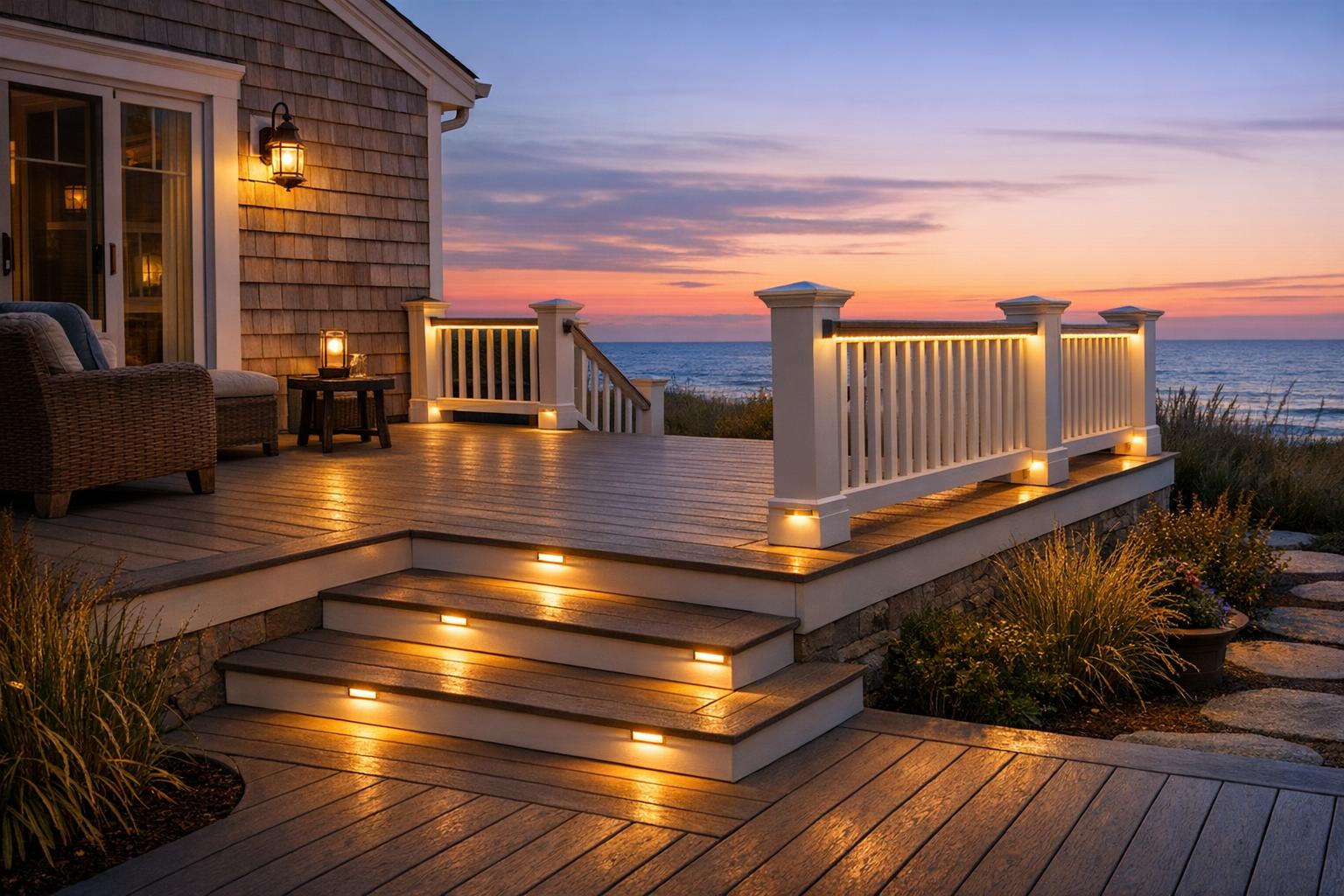
Installing small lights on stair risers creates a soft, even glow that makes each step obvious—especially helpful for kids, guests carrying plates, and anyone who appreciates a steadier path at night. It’s also one of the cleanest ways to support “making your house work for you at every phase of life,” because it improves visibility without adding trip hazards.
2) Under-rail lighting for a floating, coastal glow
Mounted under the handrail, linear or puck-style lights keep the source concealed while washing the deck surface with warm light. It’s a strong fit for colonials and waterfront homes because it reads “tailored” rather than decorative.
3) Post-cap lights (structure + wayfinding)
Post caps define the deck perimeter and help guests understand the edge of the space. Choose a warm color temperature (more on this below) and avoid overly bright caps that create glare from seated eye level.
4) In-deck recessed lights (use sparingly, place intentionally)
Recessed deck lights can look sleek, but too many turn the deck into a “runway.” The better approach is to place them only where they support circulation—near the top and bottom of stairs, at a landing, or near a transition to a walkway.
5) Wall sconces at doors (a classic that ties indoors to outdoors)
A well-proportioned exterior sconce at the deck door makes the outdoor area feel like a true extension of the home. It’s also functional when you’re juggling keys, trays, or pets. For a coastal look, many homeowners lean toward simple, sturdy silhouettes rather than ornate lanterns.
Coastal Reality Check: Materials and Ratings That Hold Up Near Salt Air
“Outdoor rated” isn’t always enough on the Cape. Salt-laden air can accelerate corrosion, and exposed fasteners can degrade faster than homeowners expect. When you want lights that last, ask about the fixture body material, finish system, and wet-location suitability.
| What to Check | Why It Matters on Cape Cod | Practical Tip |
|---|---|---|
| Marine-appropriate materials (e.g., quality stainless, brass, or coastal-grade aluminum) | Helps resist corrosion, pitting, and finish failure in salty, humid conditions. | Ask if the fixture is designed for coastal environments—not just “outdoor use.” |
| Wet-location listing | Your deck is exposed. Wind-driven rain happens. | Use fixtures listed for wet locations where they can be directly exposed to weather. |
| Sealing + gaskets | Keeps moisture out of sensitive components and prevents premature failure. | Prioritize fixtures with well-sealed lenses and protected wiring connections. |
| IP rating (when available) | Higher ingress protection typically indicates better resistance to water/dust intrusion in exposed areas. | For exposed exterior locations, many coastal guides recommend targeting IP65+ where appropriate. |
Design note: If you love the look of darker fixtures, confirm the finish is appropriate for coastal exposure. On the Cape, the wrong finish can show wear faster—especially on hardware and edges.
Step-by-Step: How to Build a Deck Lighting Plan That Feels Effortless
Step 1: Mark your “must-see” zones
Circle steps, landings, door thresholds, and any uneven grade changes. These are non-negotiable for both comfort and safety.
Step 2: Choose a warm color temperature
Warm light flatters cedar shingles, painted trim, and coastal landscaping. It also feels calmer for neighbors. Many dark-sky-oriented guidelines encourage 2700K or warmer (and some communities recommend even warmer) to reduce harsh blue-white light.
Step 3: Control glare with shielding and thoughtful placement
The most comfortable decks hide the light source. Favor downward light, shielded fixtures, and positions that keep bulbs out of seated sightlines. This approach supports visibility without blasting the yard (or your neighbors’ windows).
Step 4: Add controls that match your lifestyle
A simple setup can include dimmers, timers, and motion sensors (especially at side doors). Dimming is the secret weapon: brighter for arrival and cleanup, softer for conversation.
Step 5: Think ahead for “every phase of life” comfort
If you’re planning a broader remodel—or simply trying to future-proof—pair deck lighting improvements with smart circulation choices: wider, clearer pathways; easy-to-grip rail profiles; and well-lit transitions to a main-level bedroom/bath if your long-term plan includes simplifying stairs inside the home.
Local Angle: What Barnstable Homeowners Should Keep in Mind
Barnstable’s coastal conditions influence both design and durability. Wind-driven rain, salty air, and heavy summer use mean it’s worth prioritizing long-term performance—not just the look of a fixture on day one.
A neighbor-friendly approach helps everyone
Many Massachusetts communities have moved toward dark-sky-friendly principles, such as warmer color temperatures, shielded fixtures, and reduced light trespass. Even when a specific rule isn’t top-of-mind, this style of lighting simply feels better on Cape Cod—more relaxed, less harsh, and more in keeping with coastal evenings.
Plan lighting early if you’re remodeling the kitchen or bath
Many homeowners finalize outdoor plans while updating the kitchen or bathroom—because the flow to the deck becomes more important once entertaining ramps up. If you’re adjusting door locations, adding a mudroom-style drop zone, or improving a main-level layout, it’s the perfect time to coordinate exterior lighting controls and switching so everything feels seamless.
Want to get inspired by how a long-established, Cape-focused remodeling team approaches quality and craft? Visit Our Remodeling Philosophy or meet the people behind the work on Our Team Members.
Ready for a deck that feels finished after sunset?
Capizzi Home Improvement designs and builds outdoor living upgrades with Cape Cod conditions in mind—pairing practical lighting placement with materials that stand up to coastal weather. If you’re already thinking about a kitchen or bathroom remodel, we can also help align outdoor transitions and accessibility-minded details so your home works beautifully for you at every phase of life.
FAQ: Deck Lighting Ideas
What’s the best deck lighting for stairs?
Riser lights are a favorite because they illuminate each step without glare. If you prefer a more hidden look, under-rail lighting can also help define the walking surface leading to stairs.
How bright should deck lights be?
Brighter isn’t better. Aim for comfortable, low-glare light that makes edges and steps visible. Dimmers are especially helpful for adjusting to arrival, dining, and late-night ambiance.
What color temperature looks best on a Cape Cod deck?
Warm light (often around 2700K or warmer) tends to complement shingles, coastal paint colors, and landscape plantings. It also feels more relaxing and typically reduces the harshness that can cause neighbor complaints.
Do recessed deck lights leak?
They can if the product isn’t suited for exposure or if details are rushed. Use wet-location-rated fixtures where appropriate, follow manufacturer guidance, and keep the layout minimal and purposeful to limit penetrations.
How can deck lighting support long-term comfort and accessibility?
Prioritize brighter (but still glare-controlled) illumination at transitions—steps, thresholds, and walkways—and consider handrail lighting for steady guidance. If your remodel plans include a main-level bedroom and bathroom, aligning the outdoor path and lighting with that entry can make everyday routines easier over time.
Glossary (Quick, Helpful Definitions)
Explore more about Capizzi Home Improvement’s history and approach on About Us, or reach out directly through Contact Us.