Make the outdoors feel like a true “room” of your home, without fighting Cape weather
A great deck on Cape Cod isn’t just a platform with rails—it’s a carefully planned extension of how you live: morning coffee in the sun, dinners in the shade, a clear path from kitchen to grill, and seating that fits the architecture of cottages, colonials, and waterfront homes. In Barnstable, the best deck designs balance coastal character with practical durability (sun, salt air, wind, and freeze/thaw), while also planning ahead to make your house work for you at every phase of life.
1) Start with the “why”: how you want the deck to work day to day
Before picking board colors or rail styles, decide what your deck needs to do for your household. On Cape Cod, the most satisfying plans usually solve three things:
Flow
How people move from kitchen → deck → yard → beach path/driveway, without bottlenecks.
Comfort
Where the wind hits, where the sun bakes, and where you need shade, lighting, and privacy.
Longevity
Materials and details that hold up to coastal conditions—plus choices that keep the space easy to use over time.
2) Cape Cod deck design ideas that feel custom (and still practical)
If you’re collecting inspiration for a Barnstable deck, these layout concepts consistently deliver the “finished” look homeowners want—while improving everyday use.
Zoned decks: dining, lounging, and “landing” spaces
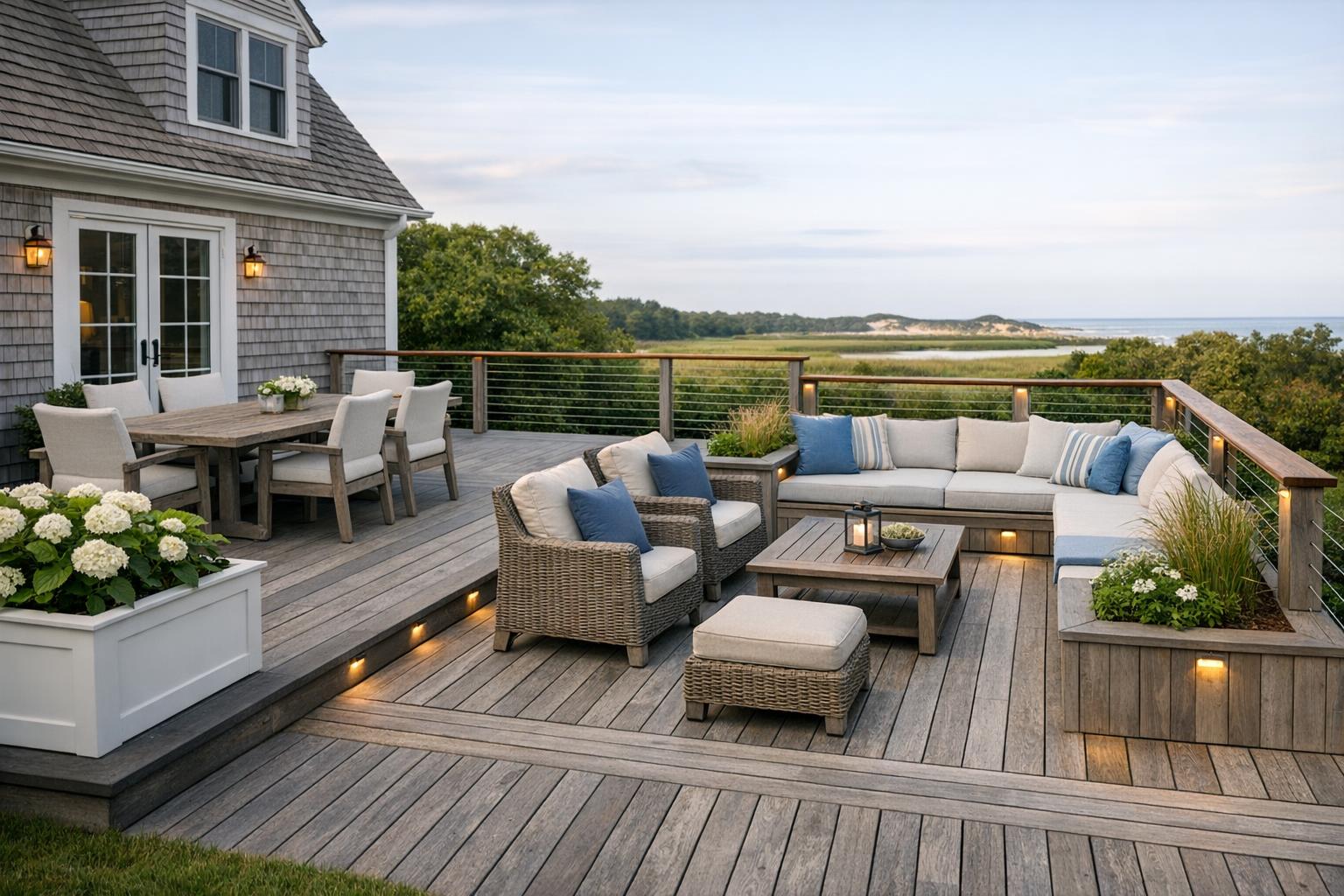
A single, oversized rectangle can feel exposed and hard to furnish. Instead, think of your deck as a series of connected zones: a grill/serving zone near the kitchen, a dining zone that fits your table with walk-around clearance, and a lounging zone oriented toward the view or yard. Even on smaller lots, subtle zoning (a change in board direction, a step-down, or a built-in bench) makes the space feel intentional and higher-end.
Built-in seating that doubles as wind management
On breezy Cape evenings, a built-in bench with a slightly higher back (or a corner banquette) can create a comfortable “pocket” without closing off the deck. Add storage under the seat for cushions and outdoor gear to keep the surface uncluttered.
Coastal railings that protect views (and reduce maintenance headaches)
For waterfront or pond views, many homeowners want slimmer sightlines than traditional wood balusters. Cable rail and certain aluminum systems can be a great match visually, but coastal environments demand corrosion-resistant hardware and smart detailing. When you’re near salt air, choosing the right-grade fasteners and components is not a “nice to have”—it’s what helps the deck look good years later.
Soft, Cape-friendly color palettes that don’t fight the architecture
Many Cape Cod homes shine with understated exterior colors: weathered gray, warm sand, driftwood browns, crisp whites, and muted blues. Decking and rail colors that complement shingles, trim, and roofing tend to feel timeless—and hide pollen and sandy footprints better than very dark boards.
3) Step-by-step: how to plan a deck that holds up on Cape Cod
Use this checklist to move from inspiration to a buildable plan—especially helpful when you’re trying to finalize decisions before peak entertaining season.
Step 1: Measure real furniture footprints (not just the deck outline)
Pick your likely table size and seating style first. Then plan circulation: allow comfortable “walk-behind” space so guests aren’t squeezing past chairs. This single step prevents decks that look big on paper but feel tight in real life.
Step 2: Choose a board direction that supports the architecture
Board direction can visually widen a narrow side yard, emphasize a view axis, or create a more “custom” look with picture framing. It’s a design move that costs far less than adding square footage—but changes the feel dramatically.
Step 3: Design for water—then for beauty
Cape decks experience wind-driven rain and heavy moisture swings. Your plan should prioritize drainage, flashing at the deck-to-home interface, and durable framing details. Once the “water management” is right, finishes and styling last longer and are easier to maintain.
Step 4: Add lighting where you actually walk
A well-lit stair and pathway is both a design upgrade and a safety upgrade. Consider low-glare step lights, post-cap lights, or under-rail lighting to keep the atmosphere relaxed while improving visibility.
Step 5: Include “future-friendly” moves now
Even if you don’t need them today, small choices can make the deck easier and safer over time:
• Wider, clearer pathways from door to seating (less weaving around furniture)
• Minimal or flush thresholds at exterior doors when feasible
• Stair geometry and sturdy graspable handrails
• Thoughtful connections to a main-level bedroom/bath plan for later-life flexibility (for example, planning an addition or interior remodel so daily living can happen on one floor)
Design tip for busy households
If you’re also considering a kitchen or bathroom remodel, align the deck plan with the rooms you use most. A kitchen-to-deck connection with the right door location and landing space often delivers the biggest lifestyle payoff.
4) Materials & maintenance: a quick comparison for Cape conditions
Your ideal material depends on the look you want, how much upkeep you’ll realistically do, and how exposed your property is to sun and salt air.
| Option | Best for | Upkeep reality | Cape Cod watch-outs |
|---|---|---|---|
| Natural wood | Classic feel; easy to repair boards | Regular washing + periodic staining/sealing | Moisture + sun can accelerate checking/warping if maintenance is delayed |
| Composite decking | Low-maintenance look; consistent color; great for entertaining | Wash as needed; no sanding/staining | Pick colors/finishes that handle sun and stay comfortable underfoot |
| PVC decking | High moisture resistance; very low upkeep | Wash as needed | Choose quality products and detailing for expansion/contraction management |
| Aluminum or cable rail systems (with corrosion-resistant components) | Clean lines; better views; modern coastal style | Low upkeep, periodic cleaning | In salt air, hardware choice matters—use components designed for coastal exposure |
If you want the “custom but practical” sweet spot, many Cape homeowners choose low-maintenance decking paired with a railing style that fits the home’s architecture—then spend design energy on layout, lighting, and built-ins.
5) A Barnstable-specific angle: planning realities that shape deck design
Barnstable neighborhoods vary—from village centers to waterfront edges—so “great design” also means designing within local constraints. Setbacks, zoning rules, wetlands or coastal considerations, and permit requirements can influence deck size, height, stairs, and even where you can place a landing. If your property is near sensitive areas or has unique site conditions, it’s smart to confirm those requirements early so the design you fall in love with is also buildable.
Practical planning tip
If you’re also considering a first-floor bedroom/bath addition or a future main-level living plan, mention it early in the design process. Aligning exterior steps, thresholds, and pathways with a long-term layout can prevent costly rework later and help keep the home comfortable through every phase of life.
Capizzi Home Improvement has served Cape Cod and the South Shore since 1976, bringing custom design and craftsmanship to projects that need to look right and work right—especially when exterior spaces tie into interior updates like kitchens and bathrooms.
Ready to turn inspiration into a buildable deck plan?
If you want help choosing a layout, railing style, and materials that suit Barnstable conditions—and coordinate with a kitchen or bath update—Capizzi Home Improvement can guide the design details before construction begins.
FAQ: Cape Cod deck design ideas
What deck layout works best for entertaining on Cape Cod?
A zoned layout typically performs best: grill/serving near the kitchen, dining with comfortable circulation space, and a lounge zone oriented to the view or yard. Even modest decks feel larger when each zone has a clear purpose.
Are built-ins worth it, or should I keep it simple?
Built-in benches and planters can be very worth it when they solve a problem—like wind exposure, limited seating capacity, or a need for storage. If they’re just decorative, they can restrict flexibility, so it’s best to design them around real use.
How do I keep a deck low-maintenance in a salty, sunny environment?
Start with material choices that don’t require regular sanding and staining, then focus on the details that protect the structure: proper water management at the house connection, quality fasteners/hardware, and smart drainage. A great maintenance plan can be as simple as seasonal cleaning and quick inspections.
What railing style looks most “Cape Cod”?
For traditional homes, simple profiles and lighter colors often blend best with trim and shingles. For homes with water views, slimmer rail systems can reduce visual clutter. The right answer depends on your architecture and how prominent the deck is from the street.
How can a deck support “making your house work for you at every phase of life”?
Deck choices can reduce common barriers over time—clear, wider circulation paths; stable handrails; safer stair design; better lighting; and planning door thresholds and exterior routes that stay comfortable to use. If you’re considering a future first-floor bedroom/bath, align the deck and entry routes with that long-term plan early.
Glossary (quick, homeowner-friendly)
Picture framing
A border detail where deck boards wrap the perimeter, creating a clean, finished outline.
Zoned layout
A deck plan organized into functional areas (dining, lounging, grill/serving) to improve flow and comfort.
Threshold
The transition at the bottom of a doorway. A well-designed threshold improves comfort, safety, and weather resistance.
Flashing
A protective material used to direct water away from vulnerable connections—especially where the deck meets the home.