If winter hot water costs feel stubborn, a heat pump water heater can be one of the cleanest “behind-the-scenes” upgrades you’ll notice every month
For many year-round homeowners in Yarmouth and across Cape Cod, hot water is a quiet but constant expense—showers, laundry, dishes, and winter comfort routines that don’t take a day off. A heat pump water heater (HPWH) can cut that cost dramatically by moving heat instead of making it the old-fashioned way. This guide breaks down what matters most in a coastal climate: UEF ratings, noise, space needs, condensate, winter performance, and how to stack Mass Save rebates with federal incentives—without getting lost in jargon.
What a heat pump water heater actually does (and why it’s different)
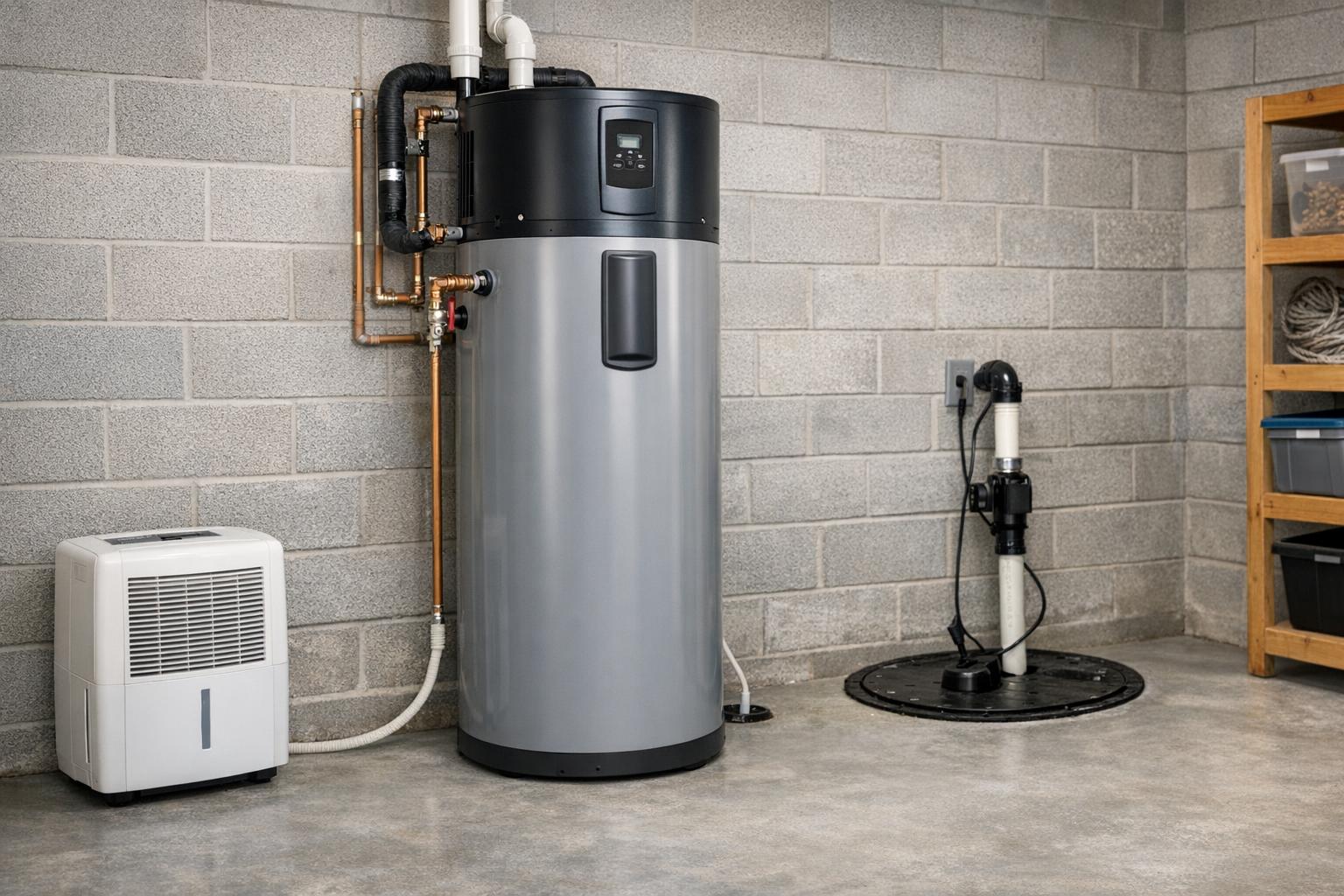
A heat pump water heater looks similar to a standard tank, but it works more like a refrigerator in reverse. Instead of generating heat directly with electric resistance elements (or burning fuel), it pulls heat from the surrounding air and transfers it into the tank. Because it’s moving heat rather than creating it, it can deliver hot water using much less electricity.
Why Cape Cod homeowners like HPWHs
- Lower operating cost than many electric hot water setups
- Dehumidifies basements (a common coastal comfort win)
- Pairs well with efficiency-focused remodeling (windows, air sealing, mechanical upgrades)
Tradeoffs to plan for
- Needs air volume (or ducting) to “breathe” efficiently
- Creates condensate that must be drained or pumped
- Has some noise (fan + compressor) during operation
Key specs that matter: UEF, tank size, and recovery
When you’re searching “heat pump water heater Cape Cod,” you’ll see spec sheets full of acronyms. For performance-minded homeowners, these three items usually drive satisfaction:
1) UEF (Uniform Energy Factor)
Think of UEF as the efficiency score. Higher is better. For many mainstream HPWHs, you’ll commonly see UEF values around the low-to-mid 3s, depending on model and configuration. Mass Save lists a typical eligibility threshold of UEF 3.30 for many standard ENERGY STAR heat pump water heaters.
2) Tank size (capacity) vs. real-life demand
The right tank size depends on household routines. A smaller tank can work if your usage is spread out; larger tanks help when multiple showers happen back-to-back (common in winter mornings or when family visits in shoulder seasons).
3) Operating modes: “Heat Pump Only” vs. Hybrid
Many units offer a hybrid mode that uses resistance elements during high demand. That can be useful during holidays or when you’re running the laundry, dishwasher, and showers close together. If your priority is maximum savings, “heat pump only” can be excellent—assuming your household’s hot water rhythm is predictable.
Step-by-step: How to plan a heat pump water heater upgrade that performs well on Cape Cod
Step 1: Choose the right location (basement and utility rooms are common)
HPWHs work best where they have enough air volume and won’t steal heat from a tight living space. On Cape Cod, basements can be a sweet spot: you often get dehumidification as a side benefit.
Step 2: Plan for condensate (this is non-negotiable)
Because an HPWH pulls heat from the air, it also pulls moisture—creating condensate similar to an AC system. Your installer should plan a gravity drain or a condensate pump to a suitable discharge point. This is one of the most common “details” that separates a smooth install from ongoing annoyance.
Step 3: Think about noise (and where it will be heard)
Most homeowners describe HPWH noise as similar to a refrigerator hum. Many resources cite a typical operating range around 40–60 dB, depending on model and conditions. The best approach is placement: keep it away from bedrooms or quiet adjacent rooms when possible.
Step 4: Confirm electrical needs (standard vs. 120V options)
Many HPWHs use a 240V circuit, but there are also 120V/15A models designed for situations where running a new 240V circuit is difficult. Mass Save lists rebate eligibility for both standard and 120V/15A heat pump water heaters (with different UEF thresholds).
Incentives that can materially change the math (Mass Save + federal)
Incentives are one reason HPWHs are getting so much attention right now—especially for homeowners trying to balance upfront cost with dependable long-term savings.
| Incentive Type | What it can cover | Amount / Notes |
|---|---|---|
| Mass Save HPWH rebate | Qualifying ENERGY STAR heat pump water heaters | $750 per unit (and $1,500 for some split-systems), with specific UEF requirements listed by Mass Save |
| Federal 25C tax credit | A percentage of the installed cost for eligible ENERGY STAR HPWHs | ENERGY STAR explains that federal tax credits may be available for qualifying heat pump water heaters, depending on installation date, eligibility rules, and tax situation |
| Massachusetts “Energy Savings Finder” | Tool to identify programs and incentives available by situation/location | State partners highlight it as a live resource for incentives and programs based on your location and situation. |
Timing note for planning
If you’re planning an install around incentive deadlines, confirm current program rules before you order equipment. Incentive terms and timelines can change, so verify current Mass Save and federal incentive details during planning.
Did you know? Quick performance facts homeowners tend to appreciate
Mass Save’s listed efficiency targets are specific. Standard ENERGY STAR HPWHs are commonly shown with a UEF 3.30 threshold for the $750 rebate, and 120V/15A models are listed with a UEF 2.20 threshold.
Noise is usually manageable with smart placement. Many homeowners never think about it after the first week—especially when the unit is in a basement or utility area rather than near bedrooms.
Incentives can stack. Mass Save shows a cost example combining the $750 rebate with a federal tax credit calculation (tax situations vary, but the concept is important for budgeting).
Local angle: What to prioritize in Yarmouth and coastal Massachusetts homes
Coastal homes often deal with a mix of humidity, shoulder-season temperature swings, and “real world” mechanical rooms that were never designed for today’s high-performance equipment. In Yarmouth-area basements, we often see homeowners benefit from:
- Moisture management: A HPWH can help dry the basement air, but condensate must be handled correctly.
- Noise-conscious placement: if a finished lower level is used as a guest space, choose location and operating mode thoughtfully.
- Right-sizing: bigger isn’t always better, but undersizing can feel painful during winter routines.
- Electrical readiness: planning a 120V option versus a 240V circuit upgrade can be the difference between a quick project and a bigger scope.
If you’re thinking about pairing a heat pump water heater with other upgrades (like air sealing, insulation, windows, or a bathroom remodel), it helps to map out the sequence so each improvement supports the next—comfort, durability, and energy performance all improve faster when the plan is coordinated.
Talk with a remodeling team that understands performance details—not just product brochures
Capizzi Home Improvement has served Cape Cod and the South Shore since 1976, and we’re used to planning upgrades around real homes—tight mechanical spaces, coastal humidity, and homeowners who want numbers to make sense. If you’re considering a heat pump water heater (or coordinating it with a broader remodel), we can help you clarify scope, placement, and the “small details” that protect long-term performance.
FAQ: Heat pump water heaters on Cape Cod
Are heat pump water heaters worth it in Massachusetts?
They can be, especially when incentives apply. Mass Save lists a $750 rebate per unit for qualifying heat pump water heaters, which can significantly reduce upfront cost, and federal tax credits may also apply depending on eligibility.
How loud is a heat pump water heater?
Expect something similar to a refrigerator-like hum. Many sources cite typical operation around 40–60 dB, with quieter experiences when installed in basements, garages, or utility rooms rather than finished living spaces.
What does UEF mean, and what number should I look for?
UEF is an efficiency metric for water heaters. Higher is better. As a practical starting point, Mass Save lists eligibility for common ENERGY STAR HPWH rebates at UEF 3.30 for many standard units (and UEF 2.20 for some 120V/15A models).
Do I need a 240V circuit?
Not always. There are HPWH models designed for 120V/15A circuits, and Mass Save lists rebate pathways for both standard and 120V options (with different efficiency requirements). Electrical constraints are a great thing to discuss early because they affect cost and project timeline.
How do I make sure I actually get the rebate?
Start by confirming your utility sponsor eligibility and selecting an eligible unit. Mass Save outlines multiple options: working with a licensed installer using participating distributors, using instant in-store discounts at participating retailers, or using the Mass Save online marketplace; they also describe a rebate portal and mail-in form routes.
Glossary (plain-English)
HPWH (Heat Pump Water Heater)
A water heater that uses a heat pump to move heat from the surrounding air into the water tank, reducing electricity use versus standard electric tanks.
UEF (Uniform Energy Factor)
A standardized efficiency rating for water heaters. Higher UEF indicates better efficiency for typical usage patterns.
Condensate
Water is created when the heat pump removes moisture from the air. It must be drained or pumped to an appropriate location.
Hybrid Mode
A setting where the unit primarily runs as a heat pump but can use electric resistance elements to meet higher hot water demand faster.
Want help deciding if a heat pump water heater fits your home layout, electrical setup, and spring project timeline? Reach out here: Contact Capizzi Home Improvement.