Old King’s Highway Window Replacement Approval (Barnstable, MA): A Clear, Risk-Reducing Plan for Early-Stage Homeowners

Building Codes & RegulationsHistoric PreservationHome ImprovementHomeowner Guides
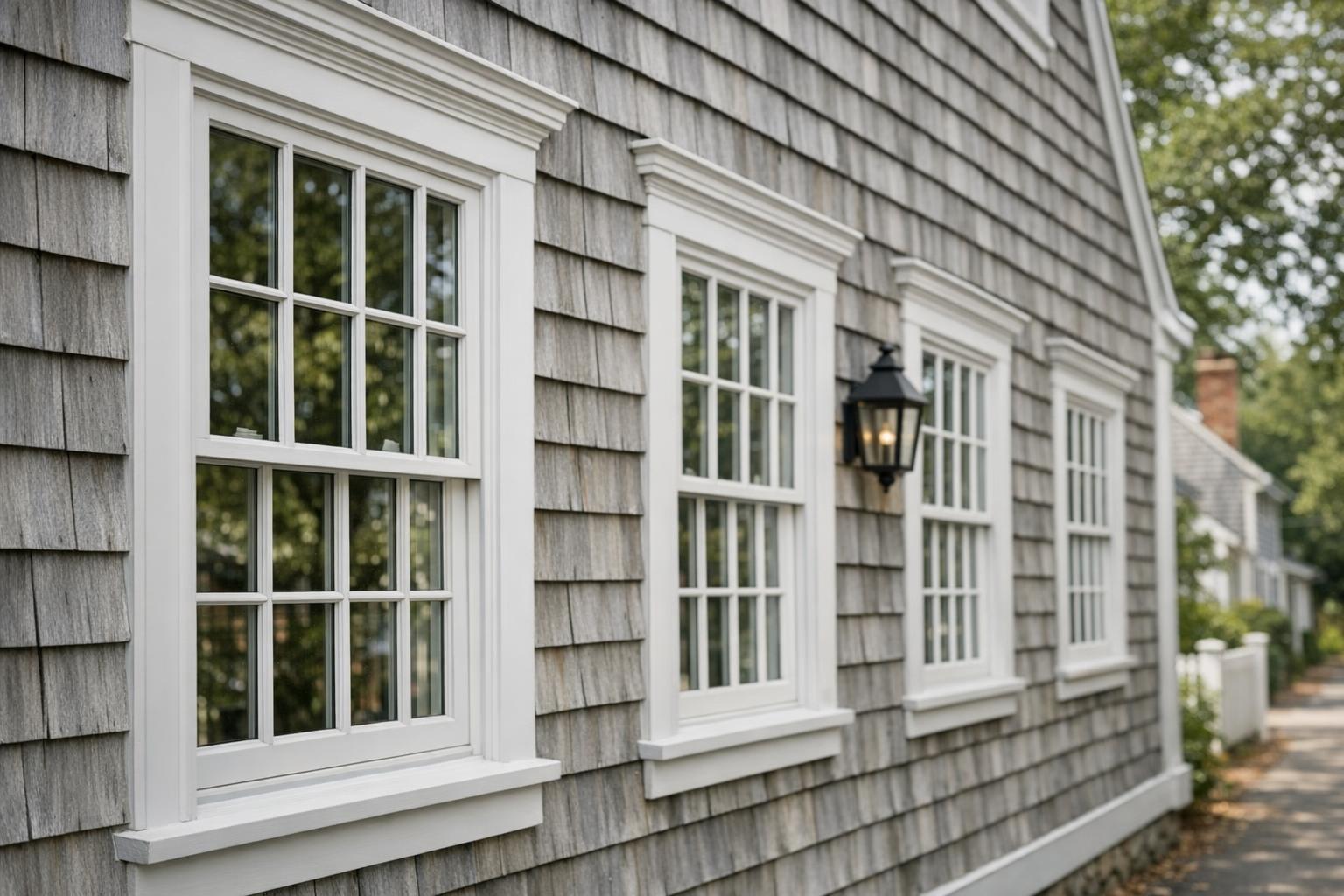
Stock photo of traditional Cape Cod windows on a historic home exterior in Barnstable, Massachusetts, showing accurate grille patterns and trim detail with no people visible.

A practical roadmap for getting your windows approved—before you spend money on the wrong design

If your home is in Barnstable within the Old King’s Highway Regional Historic District (generally north of Route 6), exterior changes—especially window replacements—often require review by the Old King’s Highway Historic District Committee. (OKH). That review is designed to protect the character of the district, and it can be straightforward when you show you’ve done your homework. It can also become a time-consuming loop of revisions if details (like grille patterns, window profiles, or visibility from the street) aren’t addressed early. The goal of this guide is to help you plan confidently, reduce uncertainty, and avoid costly redesigns—particularly if your property also sits in a flood zone where FEMA-related rules may affect the scope and timing of your project.
Quick context: Barnstable’s Old King’s Highway Historic District Committee reviews changes to the exterior of buildings/structures within the district, and evaluates items like design, proportion, texture, materials, and color for appropriateness. 

1) First: Confirm whether OKH review applies to your home

Start by confirming whether your property is inside the Old King’s Highway Regional Historic District. The district generally covers areas north of Route 6 across multiple Cape towns; in Barnstable, the committee administers local review for exterior changes within the district. 

Why this matters early: If you assume you can “just replace the windows” and order units before review, you risk being required to change grille patterns, sash proportions, materials, or exterior profiles to match what the committee considers historically appropriate—sometimes after deposits are paid.

Barnstable OKH review, in plain English: If it changes the exterior appearance, treat it as reviewable until confirmed otherwise—including some “like-for-like” window replacements, especially on visible elevations.

2) What OKH typically cares about with window replacements

While each application is reviewed on its own merits, historic district commissions commonly focus on whether a replacement preserves the home’s architectural rhythm and visible details. On Cape Cod, the issues that most often trigger revisions are:

Grille (muntin) pattern: 6-over-6, 6-over-1, no grilles, simulated divided lite—what you propose should make sense for the façade and period.
Proportions and meeting rail height: A subtle change in sash proportions can “flatten” a historic elevation.
Frame depth and exterior profile: Thick, modern-looking frames can read as out of character.
Visibility: Front and street-facing elevations tend to receive the most scrutiny.
Material and finish: Wood vs. clad, surface sheen, and trim details can matter.

Real-world takeaway: Even when homeowners feel the change is minor, committees may treat window design as a defining historical element. Public hearing notices and appeal items in the OKH system show that grille requirements can be a specific condition of approval. 

3) Step-by-step: A low-risk approval process for early planners

Step 1 — Document what you have (and what you want to change)

Take clear photos from the street and of each elevation where windows will change. Note which windows are original, which are later replacements, and any visible inconsistencies. If you have old photos or prior permits, keep them handy.
 

Step 2 — Decide what “like-for-like” means (because it’s rarely just size)

For OKH purposes, “like-for-like” typically should consider:

Overall size and rough opening
Sash configuration (double-hung vs. casement)
Grille pattern and placement
Exterior trim returns and casing details
Glass reflectivity and exterior finish
 

Step 3 — Prepare an “approval-ready” window spec sheet

Before you submit anything, compile one clean page (or a short packet) that includes:

Manufacturer/model line (or custom build description)
Profile drawings (frame/sash depth)
Grille options with notes on which elevations get which pattern
Exterior color/finish and hardware (if visible)
Energy notes (U-factor/SHGC) if relevant to your permit path

This is where many applications become “easy” for reviewers—because you’ve eliminated ambiguity.


Step 4 — Align your window plan with the Massachusetts energy code reality

Massachusetts’ building energy codes (Base, Stretch, Specialized) are tied to the IECC framework with Massachusetts amendments and updated compliance paths.

Practical point: Your window selection may need to satisfy energy performance requirements even when you’re pursuing a historically appropriate look. The best approach is to choose a window line that can meet performance targets without forcing visual compromises (like overly bulky frames).


Step 5 — If you’re in a flood zone, sanity-check “scope creep” before it triggers bigger compliance

Window replacement alone often feels small—but it can become part of a larger improvement package (siding, trim, insulation, interior renovation) that pushes the project into “Substantial Improvement” territory in Special Flood Hazard Areas. FEMA’s NFIP framework uses a 50% threshold: if improvement/repair costs meet or exceed 50% of the building’s market value, floodplain compliance requirements can be triggered (local administration matters). 

On Cape Cod, guidance also highlights that certain historic structures may be eligible for exemption from Substantial Improvement/Substantial Damage requirements when the alteration won’t jeopardize historic designation. 

Planning tip: If you anticipate phasing work over a few years, talk through how your town totals project valuations and what documentation they’ll want, so you don’t accidentally create a compliance surprise midstream.

4) Common approval pitfalls (and how to avoid them)

Pitfall Why it slows approvals Lower-risk approach
Ordering windows before OKH sign-off You lose flexibility if grille/profile changes are requested Submit specs + elevation photos first; order after approval
One grille pattern for every elevation Front façade often needs different treatment than rear Use elevation-based grille logic (front vs. sides vs. rear)
Missing profile drawings Reviewers can’t judge “historic feel” from a brochure photo Provide cross-sections and exterior sightline dimensions
Bundling windows with a big remodel without flood-zone check Project valuation can trigger higher compliance requirements Clarify floodplain scope/valuation early; document phases

5) Local Barnstable angle: what to expect from committee review

Barnstable’s OKH committee exists to preserve the integrity of the district and reviews exterior changes with attention to design, proportion, materials, texture, and color. 

One thing early-stage homeowners often underestimate is how specific conditions can be—especially on the street-facing façade. For example, OKH matters can include debate over grille patterns on replacement windows for front elevations. 

Best local strategy: Treat your front elevation as its own “historic composition.” If you want cleaner glass at the rear for views, that can sometimes be addressed thoughtfully without undermining the public-facing character—if you present it clearly.
Want clarity before you commit to window specs or submit to OKH?

Capizzi Home Improvement helps Cape Cod homeowners plan exterior improvements with the level of documentation and forethought that reduces delays—especially in historic districts and complex permitting environments.
 

FAQ: Old King’s Highway window replacement approval in Barnstable

Do I need OKH approval if I’m replacing windows with the same size?
Often, yes—because OKH review is about exterior appearance, not only rough opening size. Barnstable’s committee reviews changes to exteriors within the district. 
What details matter most for approval?
Expect attention on street-facing windows: grille patterns, sash proportions, frame profiles, and how the set relates to the home’s architectural character. Grille pattern conditions can be part of decisions. 
Can I prioritize energy efficiency and still satisfy OKH?
Usually, yes—but you need a window line that can meet energy performance goals without modern-looking bulk. Massachusetts energy code structure is tied to IECC 2021 with MA amendments, and the 10th edition became fully effective after June 30, 2025. 
If I’m in a flood zone, could window work trigger additional requirements?
Window replacement by itself may not, but once combined with other renovations, it can contribute to Substantial Improvement calculations in Special Flood Hazard Areas. FEMA’s framework uses a 50% threshold to trigger review for flood provisions and local floodplain regulations. 
Are historic homes ever exempt from the flood “50% rule” requirements?
Some historic structures may be eligible for exemption when the alteration won’t jeopardize the structure’s historic designation. That determination is nuanced and depends on local administration and documentation. 

Glossary (helpful terms for OKH + flood zone planning)

OKH (Old King’s Highway)
Shorthand many homeowners use for the Old King’s Highway Regional Historic District and the local town committee that reviews exterior changes within the district. 
Substantial Improvement (SI)
A floodplain management concept used under NFIP rules: if the cost of improvements equals or exceeds 50% of the building’s market value (structure value, not land), additional flood compliance requirements may be triggered (administered locally). 
SFHA (Special Flood Hazard Area)
A mapped high-risk flood zone (often 1% annual chance floodplain). SI/SD requirements typically apply when a structure is in an SFHA and local rules adopt NFIP standards.
Muntins / Grilles
The divisions that create the look of smaller panes in a window. On historic homes, the pattern (for example, 6-over-6) can be a key approval detail. 

RELATED ARTICLES

Navigation ▼ Blueprint for Success Navigating Yarmouth’s Building Codes and Permits Assembling[…]