Best Window U-Factor for Cape Cod Homes (Yarmouth, MA): What to Target, What to Avoid, and How to Compare

Coastal LivingEnergy EfficiencyHome ImprovementWindow Replacement
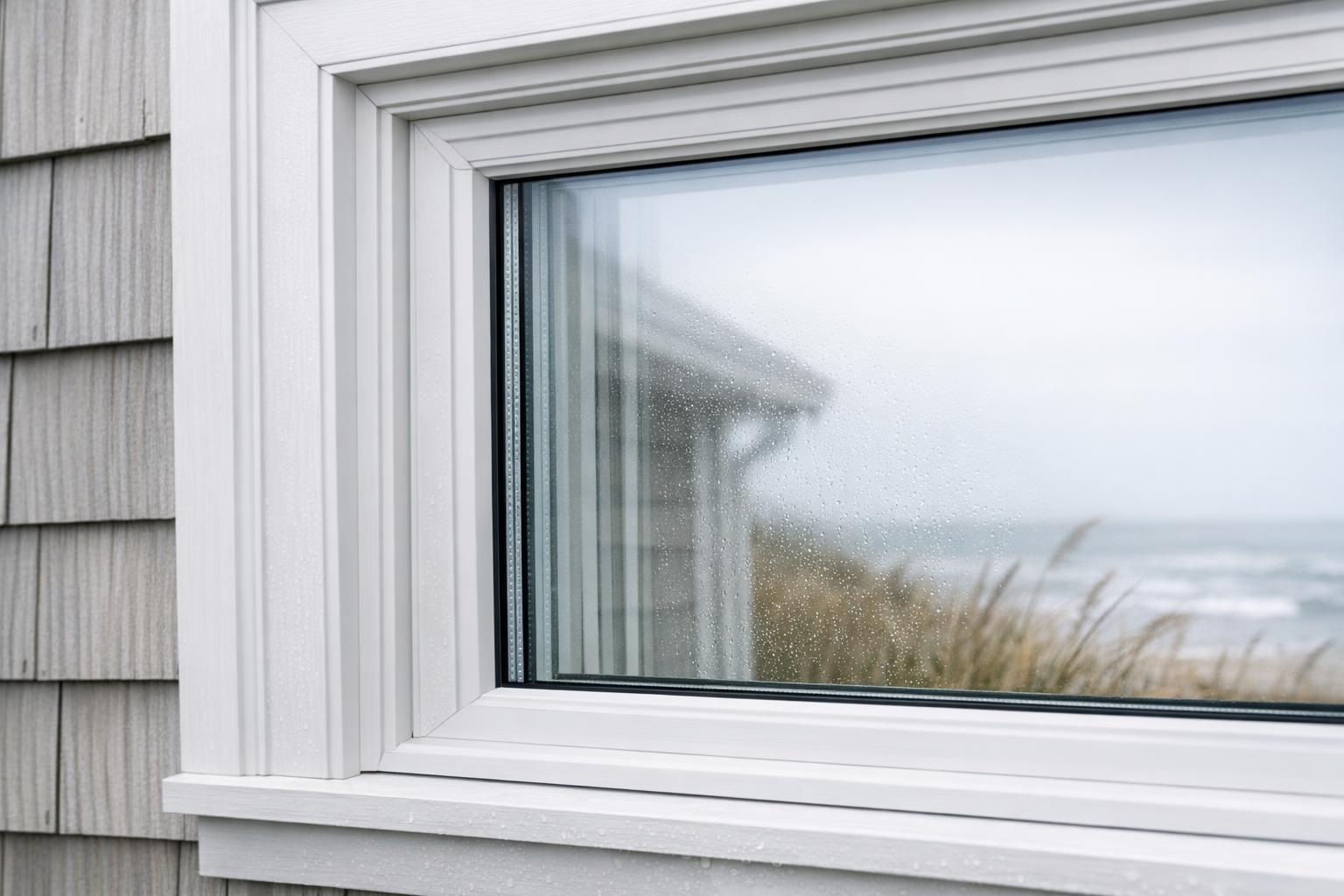
Close-up stock photo of a modern, well-sealed window installed in Cape Cod style siding, highlighting energy-efficient features and weatherproofing, with hints of coastal landscape in the background.

A practical guide for year-round comfort, lower winter bills, and fewer drafts

Cape Cod winters are hard on homes—especially when older windows leak air, feel cold to the touch, or let wind-driven rain find its way into trim and framing. If you’re researching the best window U-factor for Cape Cod, you’re already focused on the number that matters most for winter comfort. This guide explains what U-factor means, what targets make sense in a coastal Massachusetts climate, how to balance U-factor with SHGC (solar gain), and how to compare real products without getting lost in marketing.

What U-Factor really tells you (and why it matters on Cape Cod)

U-factor measures how quickly heat moves through a window. Lower is better: a lower U-factor means less heat escapes in winter and less cold “radiates” inward from the glass. In the U.S., window U-factors are typically reported in Btu/h·ft²·°F, and common values range from about 0.2 to 1.2
For many year-round Cape Cod homeowners, the pain points are familiar:

• Drafts around sashes and trim (air leakage, not just glass performance)
• Cold “ghosting” near windows and condensation risk
• Heating systems working harder during nor’easters and long cold stretches

U-factor is a core part of solving these—especially when paired with a tight installation and proper air sealing.

Best window U-factor for Cape Cod: the targets that make sense

Because Cape Cod sits in a cold-weather performance environment, you’ll typically want a window that meets ENERGY STAR Northern Zone levels. ENERGY STAR’s Northern Climate Zone criteria provide useful benchmarks for cold-weather window performance, and the lowest U-factor options typically fall into ENERGY STAR’s “Most Efficient” category.
Practical U-factor targets for year-round Cape Cod comfort
Good: U ≤ 0.27 (baseline “better than average” for many replacements)
Better: U ≤ 0.22–0.25 (strong winter performance; aligns with Northern/North-Central style targets)
Best (when budget and product availability allow): U ≤ 0.20 (often triple-pane / “Most Efficient” class)
A helpful reference point: some window packages are designed to meet ENERGY STAR criteria across multiple climate regions, but a one-size-fits-all configuration isn’t always the best match for Cape Cod comfort and solar strategy (more on SHGC below).

Don’t look at U-factor alone: match it with SHGC for real-world performance

SHGC (Solar Heat Gain Coefficient) measures how much solar heat passes through the glass. In colder regions, ENERGY STAR’s Northern Zone criteria allows higher SHGC options (and trade-offs), because winter sun can help warm a home when you want it. 
For Cape Cod specifically, the “right” SHGC depends on your orientation and summer comfort:

South-facing rooms: a moderate-to-higher SHGC can improve passive winter warmth, especially if you have good overhangs or shades.
West-facing rooms: be cautious—late-day summer sun can overheat spaces. Lower SHGC may be more comfortable.
Wind exposure and salt air: durability, air sealing, and hardware quality matter as much as the ratings.

How to compare windows without getting burned by spec sheets

Use this step-by-step checklist when you’re collecting quotes or narrowing product lines. It keeps the conversation focused on performance—not just brand names.

Step-by-step: the Cape Cod window spec checklist

1) Start with your target U-factor. For year-round comfort in Yarmouth, many homeowners aim for U ≤ 0.22–0.25, and consider U ≤ 0.20 for maximum comfort if the budget supports it.

2) Confirm ratings are NFRC-labeled. Ratings should be certified and comparable apples-to-apples. (If a quote can’t show the rated numbers clearly, pause.)

3) Choose SHGC by orientation. Ask your remodeler to recommend SHGC ranges by elevation (north/south/east/west) rather than picking one glass package for the whole house.

4) Ask about air leakage and installation details. Even a great U-factor won’t feel great if the unit is installed without proper air sealing, flashing, and water management.

5) Verify egress, tempered glass, and code items. Bedrooms, bathrooms, and stair areas can trigger safety requirements that affect scope and cost.

6) Plan around mechanical upgrades. If you’re considering heat pumps, improved windows and air sealing can reduce required capacity and improve comfort.

Did you know? ENERGY STAR reports that certified windows can reduce heating and cooling energy bills (nationally) compared to non-certified products, and their savings models use baseline assumptions that show just how leaky single-pane windows can be. 

Quick comparison table: what different U-factors feel like

Window Performance Tier Typical U-Factor Target What You’ll Notice in Winter Best Fit For
Entry-level efficient replacement ≤ 0.27 Less cold glass than older windows; still may feel chilly near large openings Budget-controlled upgrades, rentals, partial replacements
High-comfort coastal performance ≤ 0.22–0.25 Noticeably warmer interior glass; fewer drafts when paired with good install Year-round Cape Cod homes, families prioritizing comfort + bills
Top-tier (often triple-pane) ≤ 0.20 Best comfort near windows; strong cold-weather performance Homes with persistent comfort issues, high wind exposure, long-term stay plans
Note: comfort also depends heavily on airtightness, flashing, insulation continuity, and room air circulation—numbers don’t replace good workmanship.

Local angle: Yarmouth & Cape Cod realities that should guide your window choices

Coastal homes around Yarmouth face a mix of cold winter winds, salt exposure, and wet weather. That combination makes installation quality and water management just as important as the glass package. If you’re planning a spring project, it’s smart to confirm lead times early, align window work with any siding/trim scope, and make sure the plan includes:

• Proper flashing and integration with existing siding/housewrap
• Air sealing at rough openings (not just caulk at the exterior)
• Trim details designed to shed water and resist rot
Performance + incentives tip (Massachusetts)
Mass Save lists a $75 per window incentive for certain upgrades from single-pane windows to qualifying ENERGY STAR “Most Efficient” windows, with specific eligibility and verification requirements that can change over time.

Want help selecting the right U-factor and glass package for your home?

Capizzi Home Improvement has served Cape Cod and the South Shore since 1976, with a process built around clear specs, craftsmanship, and long-term performance. If you’d like a plan that balances comfort, durability, and budget, schedule a consultation.
Prefer to research first? You can also review Capizzi’s remodeling philosophy and awards & recognitions.

FAQ: Cape Cod window U-factor and performance

What U-factor should I choose for Yarmouth, MA?

If winter comfort and heating cost are your priority, a strong target is U ≤ 0.22–0.25. If you want top-tier performance and the product line fits your budget, consider U ≤ 0.20 (often triple-pane). ENERGY STAR’s Northern Zone criteria provides useful benchmarks. 

Is a lower U-factor always worth it?

Not always. Going from very old windows to a solid modern replacement can be a big leap. The “worth it” point depends on your comfort complaints, window size, exposure to wind, and how long you plan to stay. Also, installation quality can make or break the result—so budget for the full scope, not just the unit.

What’s a good SHGC for Cape Cod?

It depends on orientation. South-facing glass can benefit from moderate solar gain in winter, while west-facing rooms often need lower SHGC to reduce summer overheating. ENERGY STAR Northern Zone criteria also reflect that colder climates can use higher SHGC values (with allowed trade-offs). 

Do I need ENERGY STAR windows, or just a good U-factor?

ENERGY STAR certification is a helpful shortcut because it’s tied to tested performance thresholds for your climate zone and relies on certified ratings. You can still evaluate by numbers, but the label helps confirm the window meets a recognized standard. 

Are there rebates for window replacement in Massachusetts?

There can be, depending on your existing windows and the product you install. For example, Mass Save lists a $75/window incentive for certain upgrades from single-pane to ENERGY STAR Most Efficient windows, with specific verification and timeline rules. 

Glossary (window performance terms)

U-Factor
A measure of heat transfer through a window. Lower U-factor means better insulation and typically better winter comfort. 
SHGC (Solar Heat Gain Coefficient)
A measure of how much solar heat passes through glass. Lower SHGC reduces unwanted heat gain; higher SHGC can help capture beneficial winter sun, depending on orientation. 
NFRC Label
A certified label showing standardized performance ratings (like U-factor and SHGC) so you can compare windows fairly. 
ENERGY STAR “Most Efficient”
A designation for top-tier efficiency within ENERGY STAR, with very low U-factor targets (often requiring triple-pane performance) depending on the product category and climate zone. 

RELATED ARTICLES

Ice Dams & Heavy Snow on Your Roof?

After recent storms, and with more winter weather on the way, many Cape Cod homeowners are dealing with snow and ice buildup that can lead to leaks, ceiling stains, and costly roof damage.

At Capizzi Home Improvement, we understand how stressful winter conditions can be when your home is at risk. That’s why we offer professional residential roof snow and ice dam removal to help protect your home during harsh weather.

Our service includes:

  • Safe, careful snow and ice removal
  • Methods designed to minimize roof damage
  • A trusted local team serving Cape Cod for nearly 50 years

Availability is limited and services are weather-dependent. If you’re concerned about your roof, now is the time to act. Call our office to learn more or schedule service.