Cape Cod homes are known for their steep roofs, compact footprints, and one-and-a-half-story layouts. While charming, these homes often lack adequate headroom and usable space on the second floor. The sloped roofline creates knee walls that limit functionality, leaving homeowners with cramped bedrooms and awkward storage areas.
A second-story addition solves this by expanding upward and creating full-height living spaces. Done correctly, this type of project increases square footage, adds value, and maintains the home’s architectural character. Done poorly, it compromises structural integrity and creates a disjointed appearance. The difference comes down to understanding Cape Cod construction principles and working with professionals who specialize in these homes.
From load-bearing analysis to dormer integration, every decision matters when adding a second story to a Cape-style home. This guide covers the structural, functional, and design considerations that define successful second-story additions.
Understanding Structural Requirements for Cape Cod Second-Story Additions
Before any construction begins, the existing structure must be evaluated for load-bearing capacity. Cape Cod homes were originally designed for modest second-floor loads, usually just attic space or small bedrooms with limited furniture. Adding a full second story with multiple rooms, bathrooms, and occupants significantly increases the structural demands.
The foundation, load-bearing walls, and floor joists all need assessment. Many Cape homes have 2×6 (especially those built prior to 1960) or 2×8 ceiling joists that were adequate for holding up plaster ceilings but insufficient for supporting floor loads. Reinforcement often involves sistering new joists alongside existing ones or installing engineered beams to carry additional weight.
Foundation capacity is another concern. If the existing foundation wasn’t designed for the additional vertical load, reinforcement or underpinning may be necessary. A structural engineer provides load calculations and specifications for any required upgrades. Their stamped drawings become part of the permit application and guide the construction team.
This isn’t an area for guesswork. Professional evaluation ensures the home can safely support the addition and prevents issues like sagging floors, cracked walls, or structural failure. Working with builders experienced in Cape Cod additions means structural concerns are identified early and addressed properly.
Staircase Planning: Placement, Configuration, and Code Compliance
Staircase placement is one of the most critical design decisions in a second-story addition. The staircase consumes significant space on both floors and affects how the entire home functions. Poor placement creates awkward traffic patterns and wastes square footage.
Common placement strategies include central hallway locations, side placements along exterior walls, or integrating stairs within a first-floor addition. Central placement provides balanced access to second-floor rooms but may require reconfiguring first-floor walls. Side placement preserves the main living areas but can create longer upstairs hallways.
Building codes dictate stair dimensions. Riser height cannot exceed 7¾ inches (IRC) with consistent height throughout. Treads require a minimum 10-inch depth. Headroom must be at least 6 feet 8 inches along the entire run. Stair width must be at least 36 inches between handrails. Landings at top and bottom must extend at least 36 inches in the direction of travel.
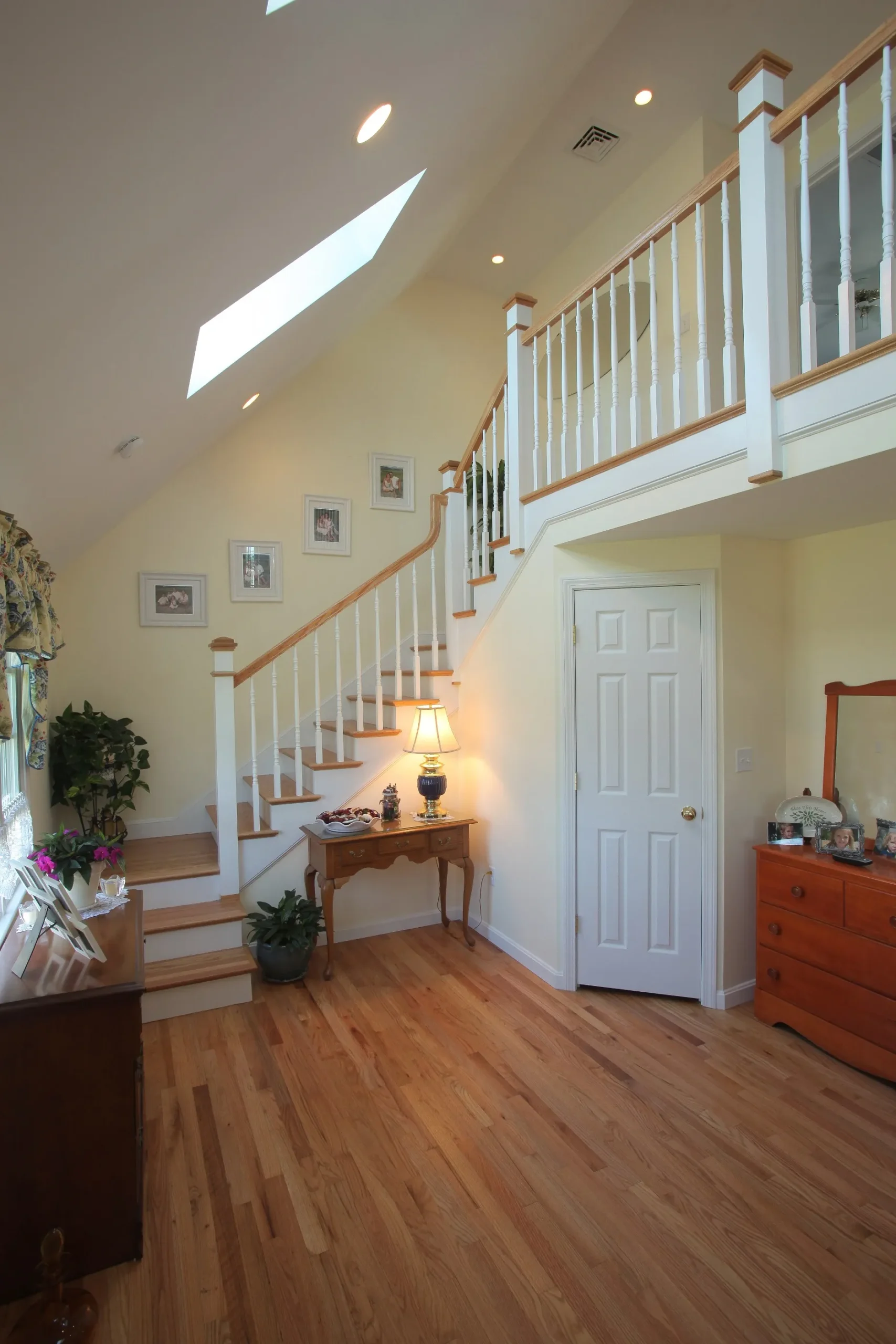
Staircase configuration depends on available space. Straight-run stairs are simple but require long, uninterrupted runs. L-shaped stairs turn 90 degrees at a landing, fitting tighter spaces. U-shaped stairs reverse direction at mid-level, creating compact footprints but requiring careful headroom management.
The stairwell opening must be properly framed with headers and trimmers to maintain structural integrity. Professional carpenters ensure the staircase integrates with the existing structure and meets all code requirements for safety and function.
Dormer Design Options for Maximizing Second-Floor Space
Dormers are the most effective way to increase usable second-floor space without raising the entire roofline. They extend vertically from the roof, creating headroom and allowing for windows that bring in natural light. Choosing the right dormer style depends on how much space you need and where the dormer will be located.
Shed Dormers
Shed dormers are the most popular choice for Cape Cod additions. They feature a single sloped roof extending from near the ridge down toward the eaves at a shallower pitch than the main roof. This design creates long stretches of vertical wall space, maximizing interior square footage and headroom.
Shed dormers work best on rear or side elevations where they won’t disrupt the home’s front facade symmetry. They can span large sections of the roofline and accommodate multiple windows for light and ventilation. Structurally, shed dormers require careful integration with existing roof framing and proper flashing to prevent leaks at the transition points.
Gable Dormers
Gable dormers project from the roof with a triangular gable end and peaked roof matching the main roofline. They’re smaller than shed dormers and typically house a single window. Gable dormers add traditional architectural character and work well on front facades where symmetry matters.
While they provide less interior space than shed dormers, gable dormers are ideal for targeted improvements like adding light to a specific room or creating a reading nook. Their traditional appearance enhances Cape Cod charm when proportioned and detailed correctly.
Matching the Existing Roof
Regardless of dormer type, integration with the existing roof is critical. The dormer’s pitch, materials, trim, and window style must match the main house. This includes using the same roofing shingles, replicating trim profiles, and maintaining consistent window proportions and sash styles.
Proper flashing at dormer valleys and sidewalls prevents water infiltration. Step flashing along sides and valley flashing where dormer and main roofs meet are essential. Ice and water shield underlayment in vulnerable areas adds protection against New England weather.
Dormer framing must be engineered to carry roof loads and transfer them to the existing structure. Professional builders handle these details to ensure both structural integrity and weatherproof performance.
Roof Framing and Structural Integration
Second-story additions require either raising the entire roof or building dormers into the existing structure. Full roof raises involve removing the old roof and building new framing to the desired height. The new rafters or trusses must match Cape Cod’s characteristic steep pitch—typically 8/12 or greater.
For dormer additions, the existing roof remains mostly intact. Openings are cut in the roof deck, headers and support framing are installed, and the dormer structure is built and tied into the main roof framing. Ridge beams, collar ties, and rafter connections must be engineered for snow loads, wind loads, and structural dead loads.
Insulation and ventilation are critical. New England building codes require R-38 to R-49 insulation in roof assemblies. This often involves dense-packed cellulose or spray foam in rafter bays, combined with proper air sealing. Ventilation pathways between insulation and roof deck prevent moisture buildup and ice damming.
Weatherproofing details make the difference between a durable addition and one that leaks. Continuous underlayment, valley flashing, step flashing, and properly sized gutters protect against water infiltration. These systems must be installed correctly the first time because fixing leaks after finishes are in place is costly and disruptive.
Interior Layout and Finish Integration
Smart interior layout maximizes the new space while working with Cape Cod’s sloped ceilings. Beds and low furniture can be placed under eaves where ceiling height is limited, leaving the center of rooms open for standing and circulation. Closets and built-in storage in knee-wall areas make use of otherwise wasted space.
Finish selections should match the existing home. Flooring, trim profiles, door styles, and paint finishes need continuity between old and new spaces. Mismatched materials make it obvious where the addition begins. Simple, traditional choices that echo the home’s original character create a unified aesthetic.
Mechanical systems require extension to the second floor. HVAC can be extended through ductwork or supplemented with mini-split systems. Electrical circuits are added for lighting and outlets. If adding a bathroom, plumbing must be vented properly and tied into existing drain systems. Experienced builders coordinate these trades efficiently.
Code compliance for bedrooms includes egress windows sized for emergency exit, properly placed smoke and carbon monoxide detectors, and adequate ceiling height. Building inspectors verify these requirements throughout construction.
Permitting, Inspections, and Code Compliance
Second-story additions require building permits that cover structural, electrical, plumbing, and mechanical work. The permitting process involves submitting plans showing compliance with local zoning and building codes, obtaining approval, and scheduling inspections at key construction phases.
Common code requirements include structural compliance verified by engineered drawings, egress windows in bedrooms, minimum ceiling heights, code-compliant stairs, and energy-efficient insulation. Zoning regulations may also affect the project through height limits, setback requirements, or lot coverage ratios.
Professional builders manage the entire permitting process. They prepare required documents, submit plans, coordinate with building departments, and schedule inspections. This keeps the project moving efficiently and ensures all work meets legal requirements.
Attempting unpermitted work creates liability and can require expensive corrections if discovered during future sales or refinancing. Permits provide documentation that protects your investment and verifies that work was done safely and correctly.
Choosing the Right Builder for Your Cape Cod Addition
The success of a second-story addition depends entirely on the team building it. Not every contractor understands Cape Cod architecture or has experience with complex structural projects. Look for builders with demonstrated experience in Cape-style additions, design-build capabilities, and partnerships with structural engineers.
Key qualifications include a portfolio of similar projects, proper licensing and insurance, strong references from past clients, and knowledge of local building departments. Design-build firms streamline the process by handling both design and construction under one roof, improving communication and coordination.
Before hiring, ask about their experience with Cape Cod homes, review their past work, and get detailed written contracts that specify scope, timeline, payment schedule, and warranties. Avoid contractors who pressure quick decisions, can’t provide references, or won’t put agreements in writing.
Quality matters more than the lowest price. A well-executed addition requires expertise, proper materials, and skilled craftsmanship. Cutting corners on contractor selection often leads to problems that cost more to fix than investing in quality from the start.
Moving Forward with Your Second-Story Addition
A second-story addition transforms a Cape Cod home from cramped and limiting to spacious and functional. When planned with proper structural analysis, code-compliant design, and careful attention to architectural integration, the result is additional space that feels like it’s always been part of the home.
The key is working with professionals who understand Cape Cod construction, local regulations, and quality building practices. From load-bearing evaluation and stair placement to dormer design and finish integration, every detail requires expertise and precision.
If you’re ready to expand your Cape Cod home with a second-story addition, the next step is consulting with experienced builders who can evaluate your home, discuss your goals, and create a plan that delivers results without compromise.Ready to start planning? Contact Capizzi Home Improvement to discuss your Cape Cod second-story addition project.